
Understanding the Scour Problem
Flow accelerates and changes direction around bridge piers, abutments, and constricted openings. Downflow, horseshoe vortices, wake turbulence, and contraction can remove bed material and expose foundations. Approach embankments and banks may also erode where the crossing redirects floodwater. Scour depth changes with flood magnitude, bed material, debris, channel migration, foundation geometry, and upstream or downstream controls. Protection must be based on the bridge's hydraulic and geotechnical assessment; a catalogue mattress thickness cannot replace predicted scour and stability checks. The supplier's role is to manufacture the specified armour system consistently and provide traceable components.
Where Gabions and Mattresses Fit
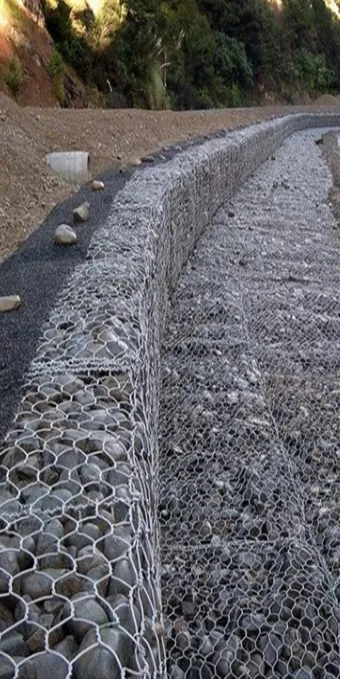
Reno mattresses protect broad bed and bank areas with a relatively thin connected armour layer. Thicker gabions form toes, transition walls, and abutment revetments. The wire enclosure prevents loss of individual stones and provides continuity across the protected footprint. A launching apron at the edge may deform into a scour hole while retaining coverage. Permeability helps equalize pressure, and flexibility accommodates some bed adjustment. These benefits depend on intact connections, secure edges, a suitable filter, durable rock, and a coating capable of resisting the exposure. Very severe abrasion, vessel impact, moving boulders, or deep mobile beds may require heavier or different systems.
Design Information the Supplier Needs
Provide plan and section drawings, design flood information, predicted scour elevations, bed and bank materials, foundation geometry, apron extents, toe details, stone grading, water chemistry, and installation conditions. The material schedule should identify basket and mattress dimensions, cell layout, mesh opening, wire diameter, coating, diaphragms, lacing, filter, and any shaped interfaces. Underwater or prefilled placement requires additional information on lifting, current, water depth, access, and connection after placement. Clear structure references allow the factory to label bundles by pier, abutment, bank, and chainage.
Installation Controls
Prepare the bed without disturbing foundation elements and install the specified granular or geotextile filter continuously. Assemble adjacent units into one connected layer, brace them, and fill with clean durable stone. Edge cutoffs, toe embedment, transitions to unprotected bed, and interfaces with concrete foundations deserve extra inspection because failures often begin at discontinuities. For underwater work, use an approved method that controls basket deformation, filter damage, stone loss, and placement tolerance. Survey the completed protection where practical and retain records of hidden edges before flood flows cover the work.
Inspection after Floods
A maintenance plan should define inspections after major events and at routine intervals. Look for scour beyond the apron, toe settlement, exposed filter, wire abrasion, broken lacing, lifted lids, stone loss, debris accumulation, bank erosion, and channel migration that redirects flow. Sonar, diver, or remotely operated inspection may be needed underwater. Flexible protection can often be repaired locally, but only if damage is found before undermining spreads toward the foundation. Monitoring results should feed back into the design of any extension or repair.
Procurement from Zhongman
Zhongman's Gabion Bridge Scour Protection System page presents the commercial landing offer for these projects. We supply double-twisted mattresses, gabions, coated-wire accessories, and optional filter fabric against the approved drawings. Send the hydraulic report, material specification, bill of quantities, and desired delivery sequence for review and quotation. Final scour prediction, footprint, and stability must remain under the bridge engineer's control.